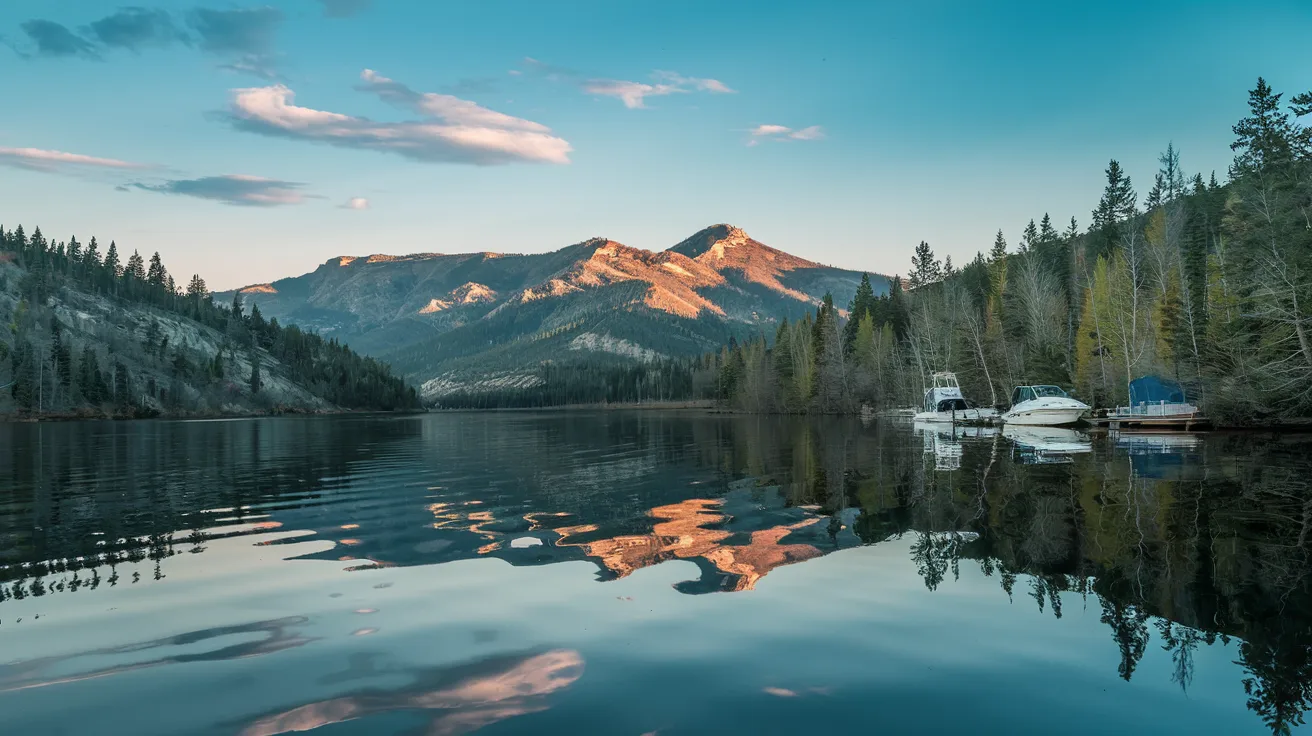
Have you ever wondered if Lake Texoma Capitalized when you write about it? Whether you are writing a school report or a blog post about your summer vacation, getting the grammar right is important. This massive body of water sits right on the border of Texas and Oklahoma. Because it is a specific, named place, we always treat it as a proper noun. This means every time you type it out, you need to use big letters for the “L” and the “T.” It makes your writing look professional and clear for everyone reading.
In this guide, we will dive deep into why Lake Texoma should be capitalized and how to use it correctly in a sentence. We will also explore some really cool facts about the lake itself. From its history during World War II to the giant striped bass that swim in its salty waters, there is so much to learn. You don’t have to be a grammar expert to get this right. Just remember that special places deserve special letters!
Biography of Lake Texoma: Quick Facts Table
| Feature | Details |
| Official Name | Lake Texoma |
| Location | Border of Texas (Grayson/Cooke) and Oklahoma (Bryan/Marshall) |
| Type of Lake | Man-made Reservoir |
| Surface Area | Approximately 89,000 acres |
| Shoreline Length | Over 1,250 miles |
| Created By | Denison Dam on the Red River |
| Year Opened | 1944 |
| Primary Uses | Flood Control, Power, and Fun (Recreation) |
| Nicknames | Texomaland, Striper Capital of the World |
Why Lake Texoma Should Be Capitalized Every Time
When we talk about grammar, we often hear about “common nouns” and “proper nouns.” A common noun is a general word like “lake” or “river.” You don’t need to capitalize those unless they start a sentence. However, a proper noun is the specific name of one thing. Since there is only one Lake Texoma, it is a proper noun. This is the main reason why Lake Texoma Capitalized. If you just wrote “the lake,” it could be any lake in the world. Using the name makes it special.
Think of it like your own name. You wouldn’t write your name in all small letters, right? The same rule applies to famous landmarks. When you include the word “Lake” as part of the official name, it becomes a partner to “Texoma.” Together, they form a single title. Keeping them both in uppercase helps the reader identify exactly where you are talking about. It’s a simple rule that makes a big difference in how people understand your story.
The Simple Grammar Rule for Geographical Places
Most people get confused about when to use big letters for geography. The rule is actually quite easy to follow! If the word is part of the official name, use a capital letter. For example, the “R” in Red River is always big because that is its name. This is why Lake Texoma should be capitalized whenever you mention it. If you were talking about “lakes in Texas” in a general way, you wouldn’t capitalize the “l,” but for this specific spot, you must.
Using these rules helps keep your writing organized. It tells the reader, “Hey, this is a specific place on a map!” If you ignore the rule, your writing might look a bit messy or confusing. Proper names act like labels. When you use them correctly, you show that you know your stuff. Whether you’re a student or just someone who loves the outdoors, knowing that Lake Texoma should be capitalized is a great tool for your writing toolbox.
A Giant Lake on the Texas-Oklahoma Border
One of the coolest things about this lake is that it doesn’t belong to just one state. It is shared by both Texas and Oklahoma! Because it covers so much ground, millions of people visit it every year. When people visit from Dallas or Oklahoma City, they often talk about their trips online. In those posts, Lake Texoma should be capitalized to help search engines and readers find the information easily. It’s one of the largest reservoirs in the entire United States.
Being on the border makes it a unique place for culture and fun. You can literally boat from one state to another in just a few minutes. Because it’s so large, it has over 1,200 miles of shoreline. That’s more than the entire state of California has on the ocean! With so many people talking about this famous border spot, it is no wonder that the question of how to spell it comes up so often.
How the Denison Dam Created This Massive Lake
Back in the 1940s, the government wanted to stop the Red River from flooding so much. They decided to build the Denison Dam. This dam blocked the water and created the lake we love today. Because the dam is a specific structure, “Denison Dam” is also a proper noun. Just like how Lake Texoma should be capitalized, you should capitalize the name of the dam too. It was a massive project that changed the land forever.
The lake wasn’t just built for fun, though. It was created for very important reasons like making electricity and keeping farms safe from floods. Today, the U.S. Army Corps of Engineers takes care of it. They make sure the water levels are safe and the parks are clean. Knowing the history of the dam helps us appreciate the lake even more. It’s a man-made wonder that provides water and power to thousands of homes nearby.
The Secret Salt in the Water
Did you know that Lake Texoma is actually a bit salty? This sounds strange because it’s not the ocean! The salt comes from the Red River. Long ago, millions of years in the past, an ancient sea covered this area. When that sea dried up, it left behind giant salt deposits deep in the ground. Now, water from the river picks up that salt. This is a very rare thing for a lake, and it’s why Lake Texoma should be capitalized as a unique geographic feature.
Because the water has salt in it, it allows certain fish to live there that usually live in the sea. The most famous one is the striped bass. These fish love the salty water and have made the lake famous worldwide. Scientists study the lake because of this “ocean-like” environment in the middle of the country. It’s just one more reason why this lake is so special compared to others.
Meet the Striped Bass: The Kings of the Lake
If you like fishing, this is the place to be! Lake Texoma is known as the “Striper Capital of the World.” Striped bass are huge, strong fish that are a blast to catch. Unlike most other lakes where people have to add new fish every year, the bass here can have babies all on their own. This is because the salty water is just right for them. When you write a fishing report, remember that Lake Texoma should be capitalized to show respect to this amazing fishing spot.
Anglers come from all over the world to try their luck. There are even professional fishing guides who spend every day on the water helping people catch “the big one.” These fish can grow quite large, and catching one is a memory that lasts a lifetime. Whether you are a pro or a beginner, the excitement of a striper on your line is something you’ll never forget.
Fun Activities: Boating, Camping, and More
There is never a boring day at the lake. With over 50 parks managed by the Army Corps of Engineers, there is plenty of room for everyone. You can go camping under the stars, have a picnic with your family, or go for a long hike. When you tell your friends about your weekend, make sure you mention that Lake Texoma should be capitalized in your text messages! It helps everyone know you’re talking about the famous vacation spot.
Sailing is also very popular here. Because the lake is so wide, the wind can really pick up, making it perfect for sailboats. If you prefer more speed, you can see people on jet skis and powerboats zooming across the waves. There are also many sandy beaches where you can just relax and soak up the sun. It’s like having a little piece of the coast right in the middle of the South.
Visiting State Parks on Both Sides
Since the lake is in two states, there are two main state parks to visit. On the Oklahoma side, you have Lake Texoma State Park. On the Texas side, you’ll find Eisenhower State Park. Both parks offer different things to see and do. Remember that the names of these parks are proper nouns too. Just like Lake Texoma should be capitalized, you should capitalize “Eisenhower State Park” whenever you write it down.
These parks are great for spotting wildlife. You might see deer, wild turkeys, or even bald eagles! The parks have well-marked trails that are safe for kids and families. Staying at a state park is a great way to experience the natural beauty of the area without having to go too far from home. It’s affordable fun that brings people closer to nature.
A Hidden History: World War II Prisoners
This is a fact that surprises many people: German prisoners of war (POWs) helped build parts of the lake! During World War II, many soldiers from the “Afrika Korps” were brought to camps in Oklahoma. They were allowed to work on projects that weren’t related to the war. They helped clear trees and build stone walls that you can still see today. This historical connection is another reason why Lake Texoma should be capitalized—it’s a site with deep historical roots.
Seeing the hand-built stone walls is like looking at a piece of history. These prisoners were treated well and worked hard alongside American workers. It’s a unique chapter in the story of the United States. If you visit the dam area, look for the beautiful stonework. It stands as a reminder of a time when the whole world was at war, yet something useful and lasting was being built right here.
Tips for Writing About Your Lake Adventures
If you are writing a blog or a social media post, SEO is your friend. Using the right words helps people find your stories. You now know that Lake Texoma should be capitalized, but you should also use other descriptive words. Mention things like “Texas fishing,” “Oklahoma camping,” or “Red River history.” This gives your readers a better picture of what you experienced.
Always try to keep your sentences simple and fun. People love reading stories that feel like a conversation. Talk about the sun setting over the water or the smell of a campfire. When you use the correct capitalization for “Lake Texoma,” it shows you care about quality. Your readers will appreciate the clear information, and you’ll feel proud of your well-written article!
Conclusion: Why Proper Names Matter
In the end, grammar is just a way to help us communicate better. Knowing that Lake Texoma should be capitalized is a small but important part of being a good writer. It respects the name of a place that provides joy to millions of people. Whether you are visiting for the fishing, the history, or the beautiful views, the lake is a treasure that belongs to all of us.
So, the next time you sit down to write about your trip, remember those capital letters! It’s a simple “L” and “T” that show the world you know your geography. We hope this guide helped you understand the rules and gave you some fun facts to share with your friends. Now, get out there and enjoy everything the lake has to offer!
Frequently Asked Questions (FAQs)
1. Is “lake” always capitalized?
No, you only capitalize “lake” when it is part of a specific name. For example, in the sentence “We went to the lake,” it is lowercase. But in the phrase “Lake Texoma should be capitalized,” it is uppercase because it’s part of the name.
2. Why is Lake Texoma so famous?
It is famous for being one of the largest reservoirs in the U.S. and for its amazing striped bass fishing. It’s also known for being a shared spot between Texas and Oklahoma.
3. Can I swim in Lake Texoma?
Yes! There are many beautiful sandy beaches and designated swimming areas in the state parks and Corps of Engineers parks. Just always remember to stay safe and wear a life jacket!
4. How did the lake get its name?
The name is a combination of “Texas” and “Oklahoma” (Tex-Oma). It was chosen because the lake sits right on the border of those two states.
5. Do I need a special license to fish there?
Because it’s on the border, you usually need a “Lake Texoma Fishing License.” This allows you to fish on both the Texas and Oklahoma sides of the lake without any trouble.
6. Is the water in the lake fresh or salty?
It is mostly freshwater, but it has a higher salt content than most lakes. This is because of ancient salt deposits in the Red River that flows into it.
Leave a Reply