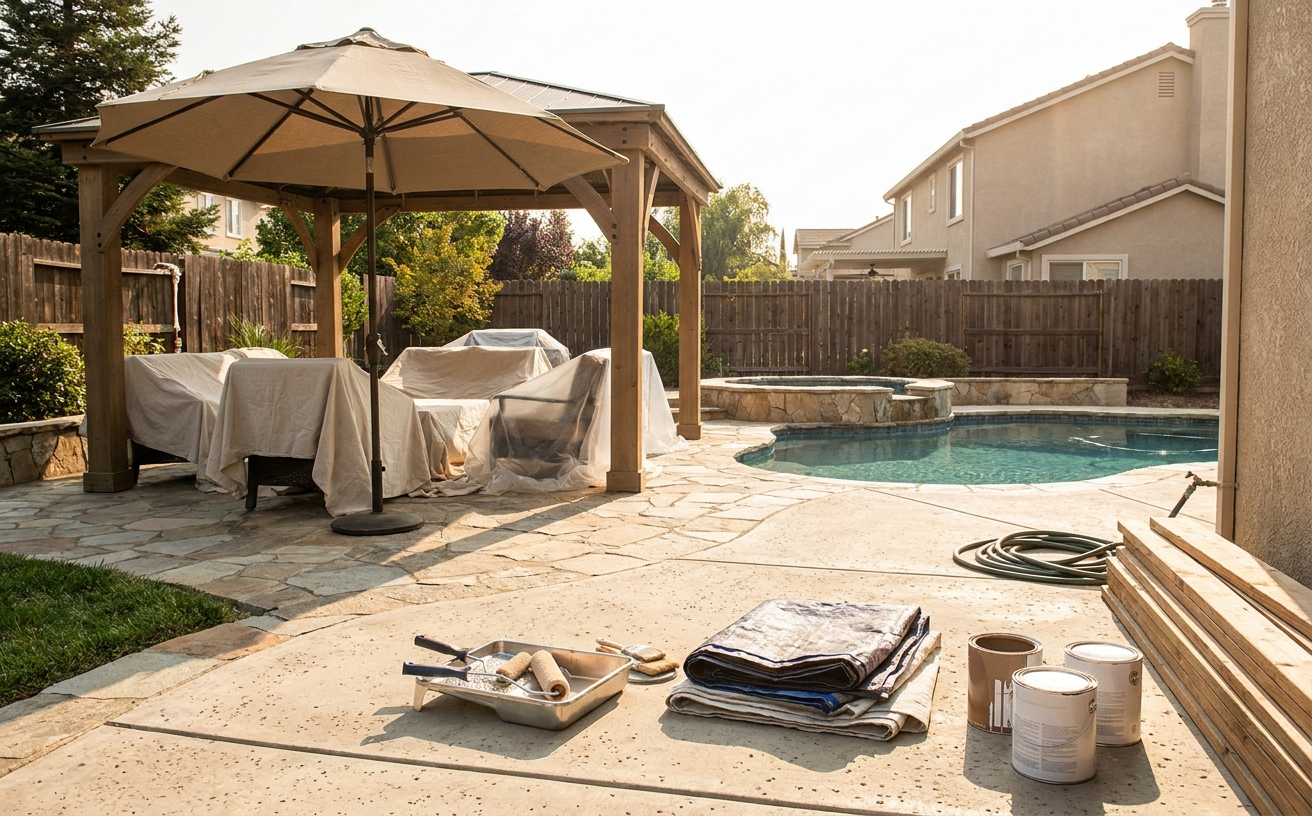
A backyard DIY project always looks simple before it starts. Stain the deck. Paint the fence. sand the patio table. repair a loose board. refresh the outdoor chairs. Add a few planters. Touch up the pergola.
Then the project begins, and the pool area suddenly becomes part of the job.
Dust moves farther than expected. Wood shavings show up near the water. Paint cans sit too close to the patio edge. Drop cloths blow around. Tools land on chairs. The deck looks half-finished, and the pool starts to feel like it is sitting inside a work zone.
For pool owners, backyard DIY requires more planning than indoor projects. The pool is not just scenery. It is an open surface that can collect the evidence of every task happening nearby.
A good project plan protects the water, the deck, the furniture, and your weekend mood.
Start With the Wind, Not the Paint
Before opening a can of paint or stain, check the wind. This sounds basic, but it can save the whole project.
A light breeze can push sanding dust, paint mist, sawdust, or loose debris toward the pool. Even if you are working several feet away, the water can still catch what the air carries.
If the wind is moving toward the pool, adjust the plan. Work on another side of the yard first. Move sanding tasks farther away. Wait for calmer conditions if the project involves fine dust or spray.
The pool does not forgive airborne mess as easily as the patio does.
A few minutes of weather awareness can prevent hours of cleanup later.
Create a Work Zone and a Pool Zone
A backyard project needs boundaries. Without them, tools and supplies drift everywhere.
Set a clear work zone. This is where paint, stain, brushes, sandpaper, hardware, power tools, and drop cloths belong.
Then set a pool zone. This area should stay clean, walkable, and free of loose project materials.
The pool zone should include the water edge, entry steps, towel area, and main walking path from the house. Nobody should leave tools, screws, sanding blocks, or paint lids there.
This separation makes the yard easier to manage.
It also protects swimmers if the family wants to use the pool after the project is finished.
Cover What You Cannot Move
Outdoor furniture, grills, storage bins, and cushions often sit close to the project area. If they cannot be moved away, cover them.
Use drop cloths, old sheets, or outdoor-safe covers. Secure them so wind does not blow them into the pool.
Do not rely on “I’ll be careful.” Backyard projects spread mess through movement. A brush gets set down. A dusty hand touches a chair. A breeze moves debris. Someone walks through the work area and tracks dust across the patio.
Covers are not only for paint.
They protect the outdoor living space from the small messes that make a project feel bigger than it is.
Keep Project Liquids Away From the Water
Paint, stain, cleaning solutions, and rinse water should stay far from the pool edge. Set up a supply table away from the water and away from drains that may move runoff toward the pool.
Do not rinse brushes near the pool. Do not place open cans on the coping. Do not clean tools where splashes or spills can reach the deck edge.
This is one of those rules that may feel obvious until the project gets busy.
When people are tired, they put things down wherever there is space. Plan the right space before the project begins.
A stable supply area prevents rushed choices.
Use a Project Shoe Rule
DIY work creates foot traffic. Dust, grass, paint flecks, sawdust, and dirt can all move on shoes.
Create a shoe rule for the day.
Work shoes stay in the work zone. Bare feet and pool sandals stay in the pool zone. If people need to cross from one area to another, place a mat or towel at the transition point.
This helps keep debris out of the pool and house.
It also reduces the chance of someone tracking project dust onto clean patio furniture or indoor floors.
A shoe rule may sound small, but it can make the entire cleanup easier.
Write Cleanup Into the Project Plan
Many DIY projects fail at the finish line. The main task gets done, but cleanup is treated as an afterthought. That is when tools sit outside overnight, dust stays on tables, and the pool area feels unusable.
Build cleanup into the plan from the start.
The project is not finished when the paint dries or the board is repaired. It is finished when tools are stored, drop cloths are folded, surfaces are wiped, and the pool area feels like a backyard again.
If you keep a home project note, you might include electric robotic pool cleaner in the pool recovery section beside reminders about skimming visible debris, clearing the steps, wiping patio surfaces, and restoring the walking paths after messy outdoor work.
That keeps cleanup connected to the project instead of treating it as someone else’s problem later.
Protect the Pool From Sanding Dust
Sanding is one of the messiest backyard tasks near a pool. It creates fine particles that travel easily.
If you are sanding furniture, fencing, railings, or deck boards, move the work as far from the pool as possible. Use drop cloths under the work area. Clean up dust before it spreads.
Avoid sanding on windy days.
If furniture can be moved to the driveway or garage, that may be better. Outdoor air helps with ventilation, but it also gives dust more freedom to travel.
The goal is to keep fine debris away from the waterline and pool steps.
Once dust reaches water, it becomes more annoying to manage.
Give Kids and Pets a Clear Boundary
Backyard projects are magnets for curious kids and pets. They want to see what is happening. They walk through drop cloths. They pick up tools. Dogs sniff paint trays. Kids step over cords and ask if they can swim.
Set boundaries early.
Explain which area is closed during the project. Keep pets inside or in another part of the yard. If kids are old enough to help, give them a safe job away from the pool edge.
Do not combine active DIY work with casual swim time unless the work area is fully secured.
A half-finished project and a pool full of kids can become stressful fast.
Keep Cords and Hoses Out of Walkways
DIY projects often introduce extra cords and hoses into the backyard. Sanders, drills, pressure washers, extension cords, and cleaning hoses can cross the same paths people use to reach the pool.
Route them carefully.
Keep cords away from water. Use outdoor-rated equipment where appropriate. Avoid running anything across the main pool path. Remove cords as soon as the task is complete.
A clean cord plan makes the yard safer and easier to navigate.
It also prevents the project from visually taking over the whole backyard.
Plan the Drying Period
Paint and stain need time. During that time, the pool area may need special rules.
No wet feet near the stained deck. No pool toys near the painted fence. No towels over freshly finished railings. No chairs moved back too early.
Write down the drying rules and tell the household.
The drying period is where many projects get damaged. Someone assumes the work is done because the tools are gone, then uses the area too soon.
Protect the finish by making the waiting period clear.
Do a Final Poolside Walkthrough
After cleanup, walk the backyard slowly.
Check the waterline, pool steps, patio furniture, supply table area, fence line, and walking paths. Look for screws, tape, plastic pieces, paint chips, sanding dust, and forgotten tools.
Then look again from the back door.
Does the pool area feel like a work zone or a living space? If it still feels like a project, remove the remaining visual clutter.
This final walkthrough makes the difference between “we finished painting” and “the backyard is ready again.”
Save Notes for Next Time
Every DIY project teaches something. Save a few notes.
What worked? What made a mess? Was the work zone in the right place? Did the wind cause problems? Did you need more drop cloths? Did cleanup take longer than expected?
These notes help with the next project.
A poolside home will always have outdoor work. Furniture needs care. fences age. decks need attention. patios change.
Learning from each project makes the next one easier.
A Better Project Protects the Pool and the Weekend
Backyard DIY can be satisfying. It can also create more mess than expected, especially near a pool.
The solution is not to avoid projects. It is to plan them with the pool in mind.
Watch the wind. separate work and pool zones. cover what cannot move. manage shoes. control cords. protect drying time. write cleanup into the project plan.
When the project is done, the backyard should feel improved, not exhausted.
A pool is part of the outdoor living space. Treat it as part of the project from the beginning, and the whole weekend will feel smoother.